FEATURE STORY
"Frostburg Undermined" Unearthed
More than 50 Years Later, Frostburg Documentary Serves as a "Timeless" Time Capsule
By Ty DeMartino '90
When Robert Mugge left Frostburg State College in the early 1970s in pursuit of a film degree, he soon realized he couldn't stay away.
He returned a year later. But this time, he brought a camera.
Mugge created the 1972 documentary “Frostburg Undermined,” a 45-minute film about the City of Frostburg which features interviews with college officials, politicians, townspeople, miners and merchants. He captured their views and hopes regarding town-gown relations, the declining mining industry, the need for new businesses and their thoughts on the passage of time.
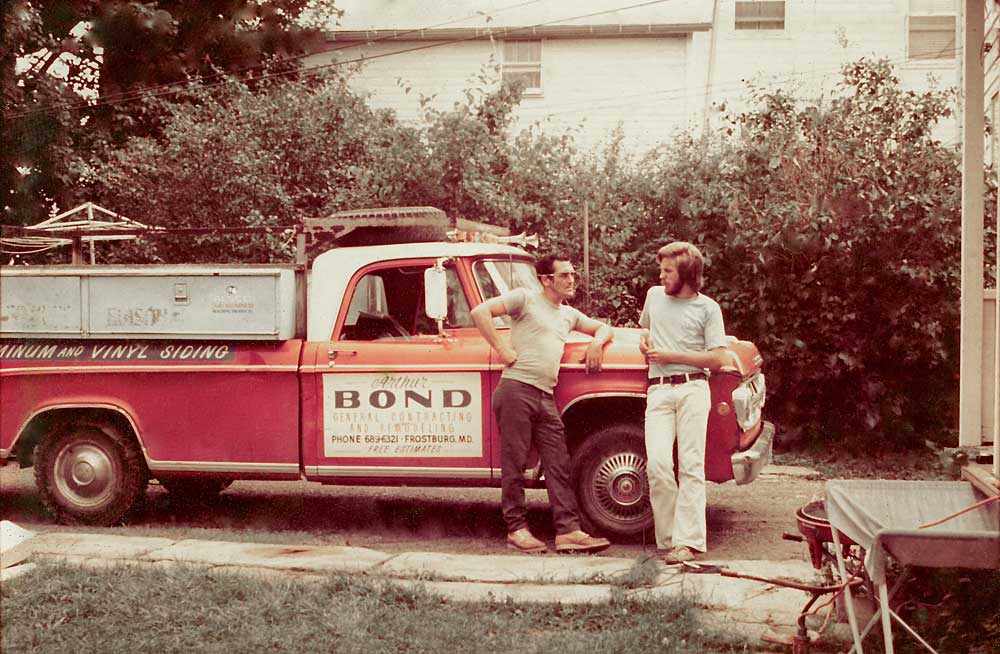
The filmmakers met with construction company owner Arthur Bond who was starting his first term as Frostburg’s mayor.
Views and hopes that, although nearly 55 years old, remain evergreen.
Even though Mugge transferred from Frostburg State to the University of Maryland Baltimore County, he couldn't quite leave the Appalachian town behind. At 22 years old, the fledgling filmmaker mined the depth of change taking place in the Mountain Maryland coal town by asking pressing questions that remain relevant today.
"I had this real sense while I was attending there -- and then when I came back -- that it was a city and a region in the midst of profound change," Mugge said. "The coal mines that had been the reason for it to exist were all but gone. They left this legacy of undermining."
He secured one of the National Endowment for the Humanities' first Youth Grants and convinced a small crew of friends to spend the summer in Frostburg documenting the city's evolving struggles. Mugge and his crew interviewed influential figures of the day, including FSC President Dr. Nelson P. Guild, Sen. J. Glenn Beall, Frostburg Mayor Arthur Bond, Philip Jenkins of Consolidated Fuel Company and the city's oldest resident at the time, 97-year-old Blanche Price.
"I had never had cause to talk to them when I was just a student there," Mugge said. "Now I saw them as the connection to the city's history."
Mugge recalled his fascination with the fact that Frostburg was built atop coal mines and the strip mining he could view from campus.
"I felt the city itself was being undermined by the loss of the mines, by strip mining, by people coming from outside with different ideas. Whether those ideas were for the better or worse depended on who you asked. It was this whole idea of a hollowing out of a city that intrigued me."
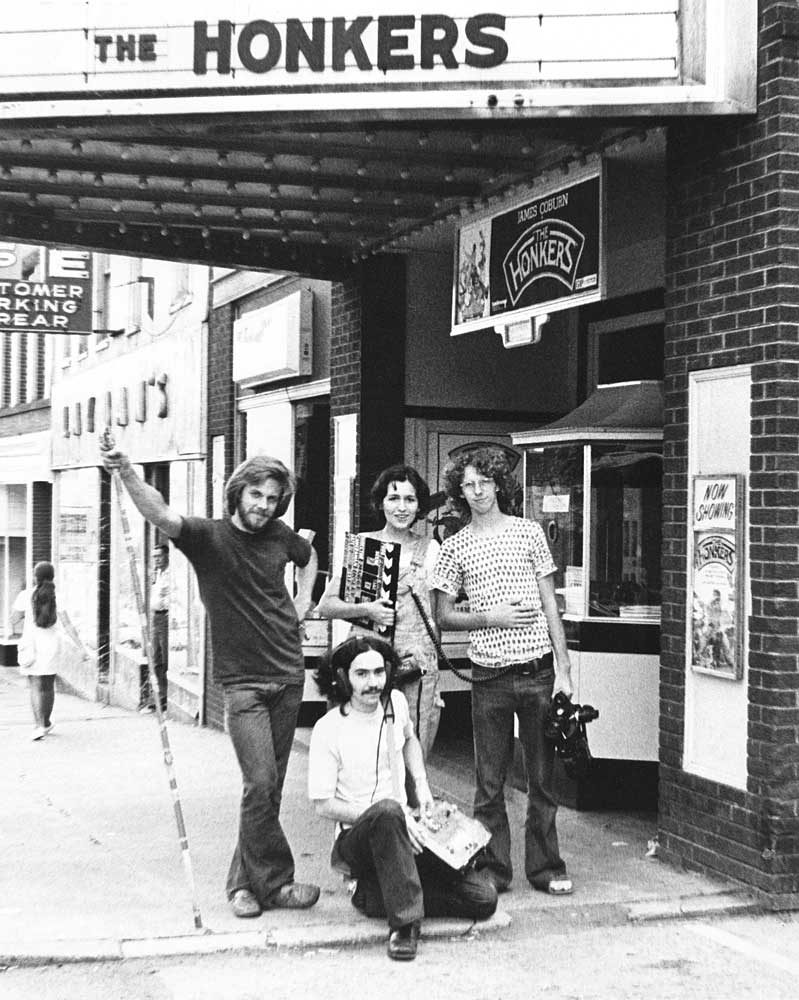
The documentary crew in 1972 included (left to right) former FSC student Robert Mugge, Joan and David Insley, and David Stambaugh (outside of the Palace Theatre on Frostburg’s Main Street).
As a student, the Silver Spring native, who grew up watching “60 Minutes” and political documentaries, filled his days at Frostburg with creative endeavors beyond the classroom. He wrote plays, organized all-night film festivals and operated a coffeehouse called The Redneck in an empty Victorian house on the edge of campus.
"I came to Frostburg with the attitude that wherever I am, I'm going to be doing my own projects. President Nelson Guild had been really, really nice to me," he recalled. "He encouraged creative projects."
That encouragement Mugge received from the administrators at Frostburg and UMBC helped launch what would become a remarkable filmmaking career. He has since built an internationally respected body of work making documentaries about music, covering such artists as Sun Ra, Sonny Rollins, Al Green, Gil Scott-Heron and Rubén Blades. He has also authored three books on filmmaking and taught at the college level. He currently resides in Muncie, Indiana.
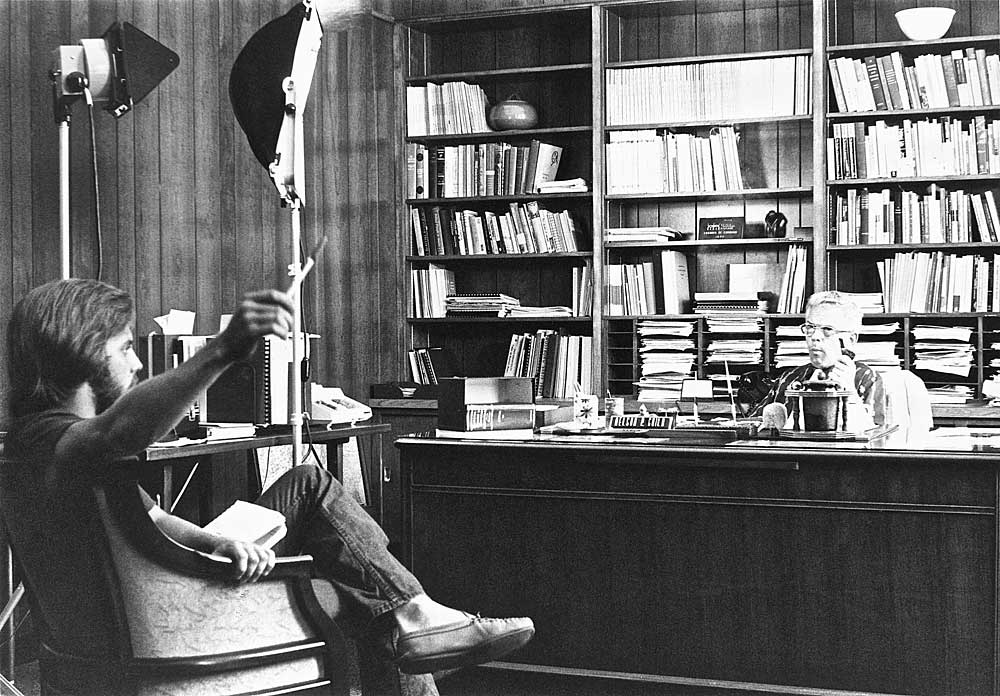
Mugge received permission to film on campus from former Frostburg president Nelson P. Guild (shown here in Guild’s office).
The documentary that launched it all, “Frostburg Undermined,” aired on Maryland Public Television, had a few screenings and warranted a 1973 feature story in The Baltimore Sun Magazine. Then it sat on a shelf collecting dust, quite literally, until a few years ago.
Mugge unearthed his only 16 mm copy of the film and contacted the movie's cinematographer, David Ensley, about another surviving print. Scene by scene, he combined the best portions of both prints into a digital restoration. The remastered version has sparked renewed interest among Frostburg alumni who remember the people, businesses and streets captured on film.
Mugge’s philosophy on filmmaking hasn't changed much over the years.
"To me, it's not a documentary if you're not documenting anything," he said. "History films are important, too. But I think you provide much more of a service if you capture what's going on in the world now."
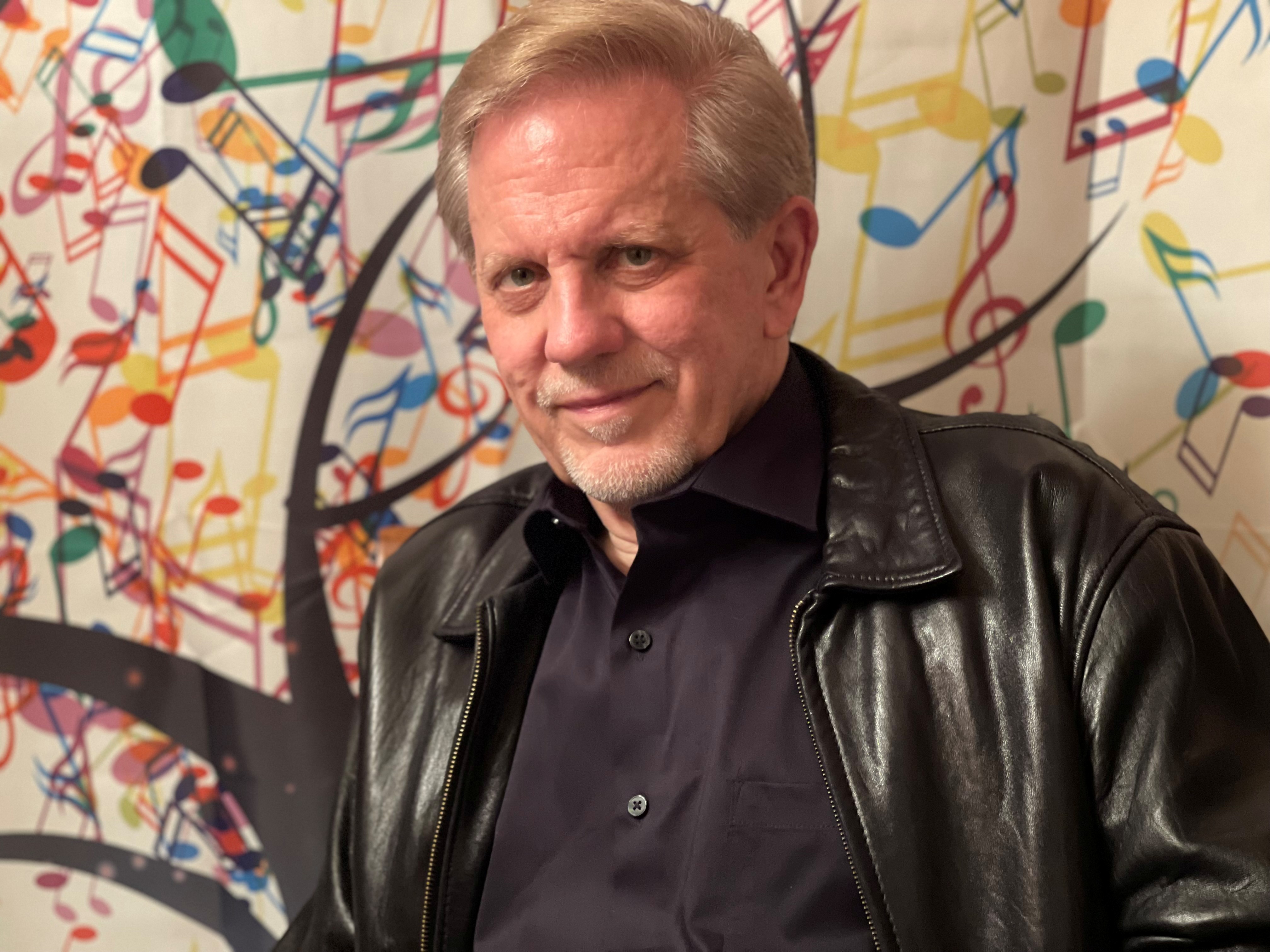
Today, Mugge continues to create movies, write and tour with his films.
He still believes the subject matter would still resonate -- even with today’s audiences.
"I get the sense that so many of these cities that I saw going through this enormous change in the '60s and into the '70s are still going through them."
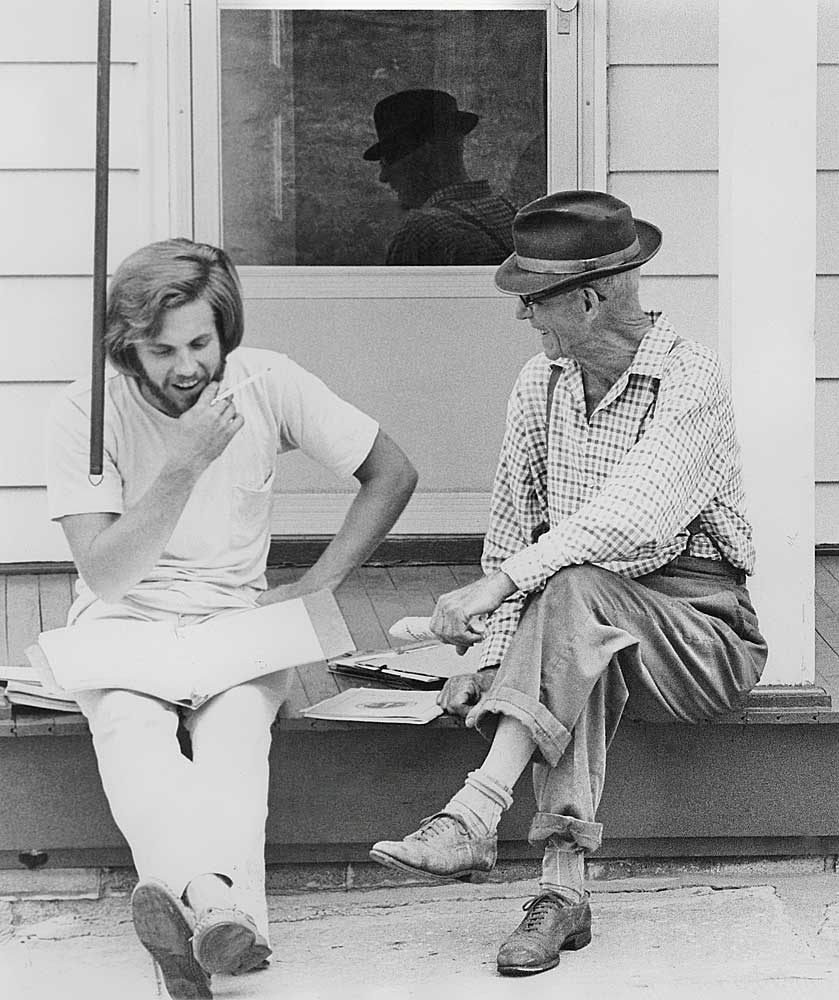
Mugge interviews a retired Frostburg miner.
Archive photos by David Stambaugh